


Pas een vacuümoliereiniger aan olieviscositeit, watergehalte, debiet en vereiste reinheid aan alvorens een offerte aan te vragen.
Invoering
Oliereinigingsuitrusting wordt gebruikt om water, gas en deeltjesverontreiniging te verwijderen van smering, hydraulische, transformator, turbine en andere industriële oliën. De juiste machinegrootte en configuratie zijn afhankelijk van de olie zelf, de aanwezige verontreiniging, het vereiste reinheidsniveau en de beschikbare tijd voor de behandeling.
Een te kleine reiniger bereikt mogelijk niet het vereiste resultaat binnen het beschikbare onderhoudsvenster. Een te grote machine kan de kosten en het energieverbruik verhogen zonder het proces te verbeteren. De juiste selectie begint met een oliemonster en een duidelijke behandelingsdoelstelling.
Deze handleiding legt de belangrijkste gegevens uit die nodig zijn om een oliereiniger te selecteren, hoe te denken over debiet en batchtijd, en welke configuratievragen moeten worden bevestigd voordat een offerte wordt aangevraagd.
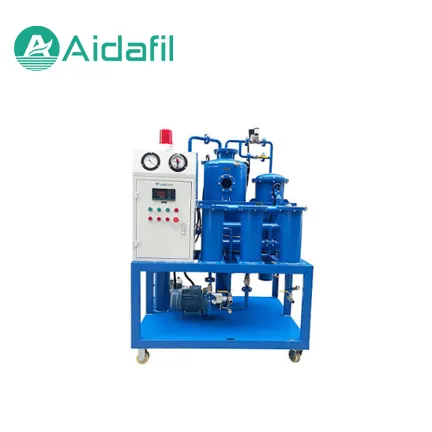
Beginnen met het olietype
Verschillende oliën hebben verschillende viscositeit, additieven, oxidatiegedrag, en gevoeligheid voor warmte. Registreer de productnaam van de olie, de ISO-viscositeitsklasse of de viscositeit bij een bepaalde temperatuur en de toepassing. Minerale hydraulische olie, compressorolie, turbineolie, transformatorolie en synthetische smeermiddelen kunnen verschillende behandelingsvoorwaarden vereisen.
Kies geen apparatuur die alleen de olienaam gebruikt. Vraag naar het technische gegevensblad en, waar mogelijk, een actuele olieanalyse. Bevestig de normale bedrijfstemperatuur van de olie en de temperatuur waarin deze wordt verwerkt.
Evaluatie van de olieanalyse
Een olieanalyse helpt identificeren welke verontreinigingen verwijderd moeten worden. Typische resultaten kunnen watergehalte, deeltjesaantal, viscositeit, zuurgraad, oxidatie, vlampunt en diëlektrische sterkte omvatten. Vooral voor transformatorolie zijn diëlektrische sterkte en vocht belangrijk.
Het doel van de behandeling moet duidelijk worden vermeld. Voorbeelden zijn het verminderen van vrij water, het verwijderen van opgelost water tot een streefniveau, het verbeteren van de reinheid van deeltjes of het herstellen van diëlektrische eigenschappen. Verschillende doelen kunnen verschillende vacuüm-, verwarmings-, kolen- en filtratiefasen vereisen.
Als de olie een hoog watergehalte, geëmulgeerd water of opgelost gas bevat, is een eenvoudig deeltjesfilter mogelijk niet voldoende. Vacuümontgassing en uitdroging kunnen nodig zijn. Als de verontreiniging voornamelijk deeltjes zijn, kan een geschikte filtratiefase de primaire eis zijn.
Bereken het vereiste debiet
Het debiet is niet alleen de nominale capaciteit van de machine. Het moet worden beschouwd als samen met het te behandelen volume olie en de beschikbare verwerkingstijd.
Een praktische startberekening is:
Vereist debiet = olievolume dat moet worden verwerkt
Dit is maar een schatting. Het werkelijke resultaat is afhankelijk van de initiële besmetting, doelzuiverheid, olieviscositeit, temperatuur, vacuümprestaties en het aantal benodigde passen. Voor kritieke apparatuur moet de fabrikant of procesingenieur de behandelingstijd bevestigen.
Consider whether the purifier will operate continuously while the equipment is running or as a batch process during a shutdown. A continuous bypass installation may require a lower flow rate than a batch treatment that must finish within a short maintenance window.
Select the Treatment Stages
An oil purifier may combine several stages:
Coarse filtration for large particles
Heating to reduce viscosity and support dehydration
Vacuum dehydration and degassing
Coalescing or separation for free water
Fine filtration for particulate removal
Optional polishing or adsorption stages
The stages should be selected according to the oil condition and the required result. Adding a stage that is not needed increases complexity and cost. Removing a necessary stage may prevent the machine from reaching the target.
Consider Oil Viscosity and Temperature
Higher-viscosity oil is more difficult to pump and process. Heating may be required, but the maximum temperature must remain within the oil and system limits. Confirm the heater capacity, temperature control, and safety interlocks.
Check the oil's flash point and the supplier's recommended processing temperature. Do not assume that higher temperature always produces a better result. Excessive heat can accelerate oxidation or degrade additives.
Check the Configuration and Installation Requirements
The machine should suit the available space, connections, power supply, and maintenance access. Consider:
Inlet and outlet connection sizes
Mobile or stationary configuration
Flow and pressure requirements
Heater and vacuum pump power
Local voltage and frequency
Required protection for the operating environment
Availability of hoses, valves, and sampling points
Waste-water or gas handling
Operator training and maintenance access
If the purifier will be used in a hazardous area, confirm the required electrical protection with the site engineer. Do not select a standard configuration without reviewing the installation environment.
Define the Acceptance Check
Before delivery or after commissioning, define how performance will be checked. A practical acceptance process may include:
28.Record the initial oil analysis.
29.Record the volume and temperature of the oil.
30.Run the agreed treatment cycle.
31.Sample the oil after the cycle.
32.Compare the result with the agreed target.
33.Record flow, vacuum, temperature, and pressure.
34.Confirm that no leaks or abnormal noise are present.
The test should use representative oil and realistic operating conditions. A bench test with clean oil does not prove that the machine will remove water or gas from the actual process oil.
Common Selection Mistakes
One common mistake is selecting by tank volume alone without considering the required cleanliness and available time. Another is assuming that a particulate filter will remove dissolved water. Some buyers compare only nominal flow rates and ignore viscosity, vacuum, and temperature.
Another risk is treating transformer oil with a machine that is not configured for the required dielectric performance. For critical oils, the treatment target and acceptance test should be agreed before purchase.


